100 Days: A Poetic Response to Wangechi Mutu’s #Kwibuka20#100 Days 61-70

Inspired by the quiet homage to the 1994 Rwanda Genocide that Wangechi Mutu started posting on social media on April 6, I decided to respond. I offer these poetic pieces as a way to think about the way in which we navigate through knowing about and understanding the genocide and other wars that endure.

Here are Days 61 – 70 as they come


Day 61

Incredulity is a soft-paced wonder

& in the thick of days

Memory is a slippery thing


What do we remember from those one hundred days?

What happened on the tenth day or night

Might have well happened today, or yesterday

Incredulous is word from an innocent space

It is tepid, blubbery sometimes

because everything can happen and everything did


Day 62

Unless you believe in the eye of the needle

This kind of poverty will never be about material

It won’t be about ragged clothing

or mud huts with broken walls

or river blindness

or murram roads

or bad humoured fields that hoard curses

and promise that there won’t be a harvest this year or next


This isn’t the poverty of sleep

or for that matter, dreams


This is my deep loss, my poverty:

He will never touch my hand again

He will never touch my hand


Day 63

Walter says life is hard

He says that there is nothing we can do about it

Walter says I have to be happy to be alive


Walter says to be alive is better than being dead

Be happy, Walter says

Be happy to be alive


If being dead is not all that it’s cracked up to be

Then what was that all that rush about?

For my happiness?


Day 64

There have been three so far

Three men who walk with your gait

Who turn, head first, the way you used to

Walk like you did, sauntering like a cat


Laugh with your laugh

Flick the wrist the way you used to

just before you pointed your finger to make a point


All three men wore your face for a moment

Lighted mine up


You mean to say?


And then you were gone again

and the men were just ordinary men

doing ordinary things


Three imposters

Three who acquiesced to your tricks of reminding me

that you used to be by me

Day 65

Often times I want to become words

I want to inhabit forgetting as a state of being


Other times I think that if we wore a cloak of silence

Then our invisibility would not be seen as repair

or a sign that everything was good


The problem of becoming silence is that silence doesn’t exist


It wasn’t ever completely silent

Nothing stopped to pay attention

Nature chattered on, busy with life cycling

And subsumed us into the process

Day 66
Sometimes I want to melt into the earth
I want to imagine that some time in the future
Children will run over the soil that I’ve become

Day 67

Some days
I want to stare at the sky
Perhaps I can learn something, anything
Some days I think about how important the sky has become
I think about it so much and in so doing, I make it exist
I make the sky an endless and expansive backdrop of blue


If there was a sky, how could it witness what it did
& maintain that calm hue?

Day 68

There’s no denying that these haunted days

Are not necessarily days of grey

There are flowers everywhere

Beauty is always undeniable

These hundred days are haunted days not grey ones

These hundred days are filled with ghosted moments

just like every day


Day 69

The world turns as it does

Spinning on its own axis and then around the sun.

Perhaps this galaxy is also spinning around something bigger

Perhaps all the worlds spin in order to avoid dealing with the numbers:


Fourteen

Three

All of them

Six from my in-laws

and all of my siblings, parents and their children

Twenty seven

Thirteen

Everyone

Everyone

All of them

Six

Nine

Twelve

My husband and all my children – seven in all

Two

Nineteen

I don’t know

I can’t count anymore

Nobody came back

I don’t know if they ran away to safety or

If they’re just all gone


Day 70

Too close for comfort when everyone around looks like you.

Too close when they speak your language

Too close when you’re from the same house

Same meal at the table

Same sofa

Same containment of the heart


We became other people

We were them, those ones

And in being slaughtered and reported as slaughtered

We lost any claim to intimacy or self

Even animals don’t commit slaughter


100 Days: A Poetic Response to Wangechi Mutu’s #Kwibuka20#100 Days 71-80

Inspired by the quiet homage to the 1994 Rwanda Genocide that Wangechi Mutu started posting on social media on April 6, I decided to respond. I offer these poetic pieces as a way to think about the way in which we navigate through knowing about and understanding the genocide and other wars that endure.

Here are Days 71 – 80 as they come

Day 71

Who says alas in the presence of betrayal?

Who dizzies away, swirling skirts & claims of nausea

Alas, alas, all the hand wringing!


It shouldn’t have been this way?

It shouldn’t?


It shouldn’t have been forms the dregs from the past


It shouldn’t have been this way


Would it have been better that all this was lobbed at your head?

Would it have been better if yours was the stuff of our nightmares?

Day 72

The difference between the top screw

and the bottom screw is this: direction


We are squeezed in by the past and the present

Everything is relative, they say

God and religion and offer escape from the screw

in the name of forgiveness, reconciliation & clean heartedness


Be like Jesus, forgive

Be like Jesus, remember to pray and to pay taxes

Be like Jesus, wear robes,

Have your first cousin shout in the streets about the second coming of yourself

Be like Jesus, hang out with prostitutes – love the sinner and all that

Above all be like Jesus and demand an answer in the moment of your cross

Why, God, have you forsaken us?

Day 73

There are witness stones along all roads

Between Jinja and Kampala

The road to Damascus

The roads leading to Kigali or Rome

Even the road less travelled

The old majesty of Kenyatta Avenue

Khao San, Via Dolorosa

And the Sea to Sky highway

where every few steps they say

is marked by the blood

of a foreign and indentured worker


Did you ever know stones in the road to scream?

They did in those days, you know

They still do sometimes

Day 74

In thirty- nine days there will be no more hindsight for sure

Today already there’s hardly any

No foresight

No insight

No encryption


In thirty-nine days, like today

There will be the same dullness about

The same powdery taste to everything

The same floaty feeling — the eerie pull to something beyond now


Ants keep busy

They have figured out that life is for living

And death is for dying


There is no space for those of us

Who are not dead and have yet to be resurrected

Day 75
There is evidence that this was a conspiracy of silence:
the insistence of green grass
the luminosity of a full moon
the leathered skin of the dead
the smile of skulls
flowers
the roar of the rushing river
endless, endless hills

If there was a shocked response
If this was an unnatural state of being
If this was a never, ever kind of situation
Why didn’t the world turn upside down?

Day 76

Another angle would have you believing that this is how it went down

This and specifically this.

And they will be right.

This is how it went down:


There were days upon days

Days upon days

Days upon days

Days upon days

Days that never seemed to end

Who’s to say when the first of a hundred days begun?

Day 77
We tried to sing but ended up croaking
We who used to be songbirds
In time, our throats had gotten dry

This is what happens when you start counting
Days in hundreds from a date that never was

Day 78

Insouciance must be blue

How else could we explain a sky that witnesses
And still insists on magical hues of its self?

Insouciance has to be blue
From royalty to madness
From the marked maleness of babies
To those that stayed death
From indigo at midnight
To the peasant hue of the mother of God
Another young woman to whom a hole in the pale sky announced
That she would bear a child
That she would bear
A boy dressed in madness

How else can we explain the resonances, echoes and exceptions?

The mother of God in us mothers of sons who had to be killed
& God in the mothers whose sons had to be killed

Day 79

A piece of cloth in a breeze

A clump of mud

A memory of desire

A broken yellow pencil with black stripes

Staedler Noris HB2 Made in Germany

A small stone

A clump of grass

A day

A pinched nerve

A delicate smell

A hill

A faded sign above the shop

Reads oca Cola It’s the Real

A child runs across the way

A list of jumbled images


None of which takes me away long enough to forget


Day 80

There is something inconsequential about all of this

One foot in front of another

One foot in front of another

To what end?


A nothing in front of a nothing

Round a round

Round a round


Never again and reconciliation

Like wayward birds about my head

Round a round a round a round a round


Blindfold me or not

Here’s another spot on the map

Where people are walking

One foot over another

One foot over another hundred days

100 Days: A Poetic Response to Wangechi Mutu’s #Kwibuka20#100 Days 81-90

Inspired by the quiet homage to the 1994 Rwanda Genocide that Wangechi Mutu started posting on social media on April 6, I decided to respond. I offer these poetic pieces as a way to think about the way in which we navigate through knowing about and understanding the genocide and other wars that endure.

Here are Days 90- 81 

Day 81
Nine times
Nine times they called out
Nine times, just nine

We know this because each call caused a finger to fall
We know this because there was one finger left
The ringed one
Only the ringed one

Day 82

This is to confirm that there is something to be said

For tying the waist really tight

Tight, tight, tight, tight

Tighter than when spoiling for a fight

Tighter that when getting ready to receive a heavy burden

Tight enough for days that rolled upon days


It was the tightness in our waists that kept us going


Day 83

We failed to read the clouds

As we had been taught to do in high school

Cumulonimbus chasing cotton balls

Cumulonimbus alone

Cumulonimbus with or without rain


What did it all mean?

What did it mean that we failed to read the sky?

It wasn’t in the cowrie shell readings

It wasn’t in the tea

Perhaps Cumulonimbus was a script in the sky

A writing that was not familiar

Not then and definitely not now


Day 84

Impressionistic moments follow each other

Like Monet come to life

It’s after two in the afternoon

Now it’s evening

Now suddenly night


Food, blanket

No food, no blanket

It’s all the same


There were no hundred days

Just a jumble of impressions

Moments that sometimes piled up

On top of each other

Sometimes moments lay side by side

Holding hands

Sleeping hungry

Or without blankets


Day 85

And God said: Let there be light

And there was light from the beginning of the world

There was light on this day like all the other days

Every day there was light enough to see everything

We didn’t always need to see

We didn’t need to see everything everyday


Day 86

My country belongs to God.

These are our scriptures:


Happy shall he be

that taketh and dasheth

thy little children unto the rock

Psalms 137:9


Vengeance is mine, sayeth the Lord

Roman 12:19


I will be there

where there are two or more gathered in my name

Christ proclaims in Matthew 18:20


Jesus must have a permanent presence in the church

Where the door has been propped ajar for eternity

Jesus Christ must live here

Where congregants were struck in supplication

Pleading for their lives, pleading, pleading for their lives


Where shall we find comfort?

Where can we go in this country of God?


Day 87

Reconciliation is minding my business

Reconciliation is minding my life

Reconciliation is aimed at my head

Reconciliation leaves me no choice


Don’t get me wrong


Reconciliation is a grand thing

Reconciliation photographs very well

Reconciliation makes people smile

Reconciliation feels good, dresses well

Writes well, conjures good dreams


Reconciliation wants me to wipe my tears dry

To wipe the slate clean — well at least wipe it

It wants me to forget my first born daughter

The one I could not bury

The one whose body I walked away from

Day 88
After all this, today
Another vigorous attempt to divvy up moments equally
Stillness, nothingness
A vacuous attempt to move, to sound, to connect to anyone, anyhow
Time flashes
Time drags
In another couple of months we will begin to grasp
The unending nature of these one hundred days
As nothing except what it was —
A nothingness that compounded nothing into being


Day 89

What do crickets know about innocence?

Were they not there?

Did they not see more than we did

Staying closer to the ground than we ever were?


Innocence in that ghastly cry –Why?  Why do we do this to ourselves?

Innocence in that other proclamation – Never, never, never again


Innocence is power without experience

Innocence is a knowing untempered

Crickets know that there is no innocence on hallowed ground


Day 90

How these hundred days

Should be days to think

About reconciliation and forgiveness

To consider the irrationality of ethnic cleansing

To see the phoenix rise again

& grief overcome

To witness humanity & good

& the power of God

To make miracles


That ultimately

Commemoration is a crafted affair

A beautiful thing

A symbol of power and resonance

The everlasting flame


We don’t have to remember

The empty space in our arms

That our lost children will never fill


This is not our liberty

We’re not free to forget


100 Days: A Poetic Response to Wangechi Mutu’s #Kwibuka20#100 Days 91-100

Inspired by the quiet homage to the 1994 Rwanda Genocide that Wangechi Mutu started posting on social media on April 6, I decided to respond. I offer these poetic pieces as a way to think about the way in which we navigate through knowing about and understanding the genocide and other wars that endure. Here are 100 Days – 91 Days

Day 91

We couldn’t have known, nine days in
That it would ever be over
It was a time warp that had us
In flashes and then in woozy moments 
That took forever

A machete hangs in a museum in Ottawa
A machete hangs perpetually in a museum in Ottawa
A machete hangs like a mockery of time
Like a semblance of that reality
In which another machete
Other machetes hang for what seemed a long time
But eventually they come down
Again and again and again and again and again
Even time marked by machete strokes
Can never be accurate


Mutu-kwibuka-91

Wangechi Mutu – 20th Anniversary Rwanda Genocide – day 91

Day 92

We wish for absolution for a clearing
for a forgetting, a filling of the heart
& a joyousness once more

We wish for children of innocence
we wish for an instantiation of things
a rationality that resonates with our emotions

We wish for the silence of the moon
the quieting of ghosts 
& a peace to rest in


Mutu-kwibuka-92

Wangechi Mutu – 20th Anniversary Rwanda Genocide – day 92


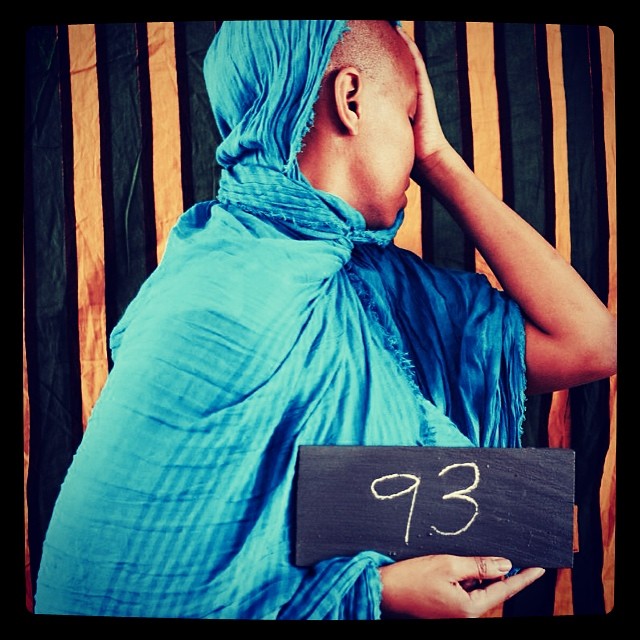
Day 93

Suffice to say that there was nothing sufficient for some
Elsewhere:
Elections, and the winners won
A car chase
War ended
Another war continued
Jackal emerged
Earth rattled
Now headlines
Now pictures
Now memories
Now colour
Now movement
Now silence
Now drama
Nothing reflects the efficiency with which those days went by
We were betrayed by a month and a half that now we call commemoration


Mutu-kwibuka-93

Wangechi Mutu – 20th Anniversary Rwanda Genocide – day 93


Day 94


We walked when our legs could carry us
hinky pinky ponky
hinky pinky ponky
Childhood rhythms carried us along
hinky pinky ponky
hinky pinky ponky
Songs from days of innocence
Like holding hands, like soft embraces
hinky pinky ponky
hinky pinky ponky
Father had a donkey
We needed a rhythm to walk
To move, to drag ourselves along

Who could count past four?
Acel ariyo adek angwen
Who could count past four?
hinky pinky ponky
hinky pinky ponky
Father had a donkey
Donkey die
Father cry
hinky pinky ponky
It seemed as though there was a time before tears
It seemed a dream to think that there was a time when fathers could cry


Mutu-kwibuka-94

Wangechi Mutu – 20th Anniversary Rwanda Genocide – day 94


Day 95


Time, they taught us
Was linear and exact 

Time was a series of beats, a line extending from the beginning of things

Forget the idea that illumination is an indication of knowing

Forget that 
We were trapped in a hundred days, a hundred days
Of light, each following the other, each following the other

Time bore witness to our erratic heartbeats but we
remain trapped in a hundred days that have morphed into years and years

How can we exist outside of betrayal by time and land?


Mutu-kwibuka-95

Wangechi Mutu – 20th Anniversary Rwanda Genocide – day 95


Day 96

What is the essence of beauty?
Why do mists mean, swirl and rise but never completely disappear?
Why should iron gleam through soil?
Why should our dances be graceful, our cloths bright
Our memories long, our language rich and layered?
Why should beauty render us speechless?
What is it to come from a land that swallows its own people?


Mutu-kwibuka-96

Wangechi Mutu – 20th Anniversary Rwanda Genocide – day 96


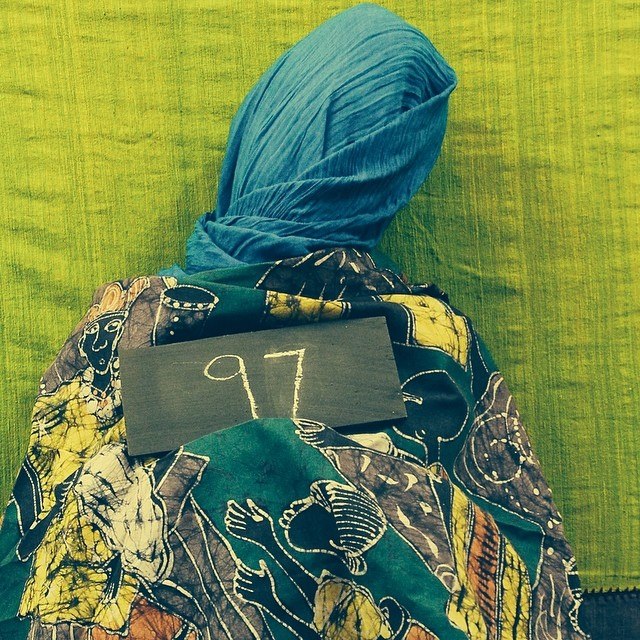
Day 97

The poet told us of her brother
The poet told us of her drunken brother, speaking of his dreams
He was an alcoholic, he was always drunk
The poet told us about her drunken brother who spoke of his mad, mad dream
She told us how he spoke like a mad man, about this dream
Like a prophet, insisting on an unknown truth
Like the drunken man that he was, imposing faith that no one wanted to hear
Like Jesus
Like all the holy prophets, even the ones we forgot
The poet told us about her brother who spoke of a dream
In which everybody would die
They would kill everybody
Except me, she said
Except me


Mutu-kwibuka-97

Wangechi Mutu – 20th Anniversary Rwanda Genocide – day 97


Day 98

If this should be a list of betrayals where should we begin?
At last, we’re here
At last, we’re gone
What is this life beyond one hundred days?
What is this life beyond one hundred days, twenty times over?
What days are left?
We were already in medias res
We were always inside one hundred days


Mutu-kwibuka-98

Wangechi Mutu – 20th Anniversary Rwanda Genocide – day 98


Day 99

It was sunrise every morning
It was the same land
The same sky 
The same rivers, hills, valleys
It was the same road that led away and back home
Same sweet air that amplified the voices through whispers, gossip, airwaves
Words leapt into our eyes and burned this new knowledge that was never new
But it was the earth that betrayed us first 
In those one hundred days that would never end


Mutu-kwibuka-99

Wangechi Mutu – 20th Anniversary Rwanda Genocide – day 99


Day 100

It was the earth that betrayed us first. 
It was the earth that held on to its beauty, compelling us to return. 
It was the breezes that were there, and then they were not there. 
It was the sun that rose and fell, rose and fell, as if there was nothing different: as if nothing changed


Mutu-kwibuka-100

Wangechi Mutu – 20th Anniversary Rwanda Genocide – day 100

Reconciliation through poetry

http://www.sfu.ca/dialogue/programs/blaney-award/reconciliation-poetry.html

Thursday, February 27, 2014
7:00 – 9:00 pm

Central Library, Alice MacKay Room, Lower Level
350 West Georgia Street

Admission is free
No registration required but seating is on a first-come, first-serve basis

Five diverse poets will unveil newly commissioned work exploring the concept of reconciliation in honour of Chief Robert Joseph, recipient of SFU’s 2014 Jack P. Blaney Award for Dialogue.

Featuring poets Jordan Abel, Joanne Arnott, Juliane Okot Bitek, Jordan Scott and Daniel Zomparelli. Co-hosted by SFU’s Centre for Dialogue as part of the 2014 Jack P. Blaney Award for Dialogue and Vancouver Public Library as part of the City of Vancouver’s Year of Reconciliation.

Guest of Honour: Chief Robert Joseph, Ambassador for Reconciliation Canada, Recipient of the 2014 Jack P. Blaney Award for Dialogue

Click here for the poet biographies

In partnership with:

vpl-logo

Special thanks to event advisors Wayde Compton, Barbara Kelly, Megan Langley and Renée Sarojini Saklikar